Jan 26, 2026 · data science, data analytics, data career, machine learning, data analyst vs data scientist
Introduction
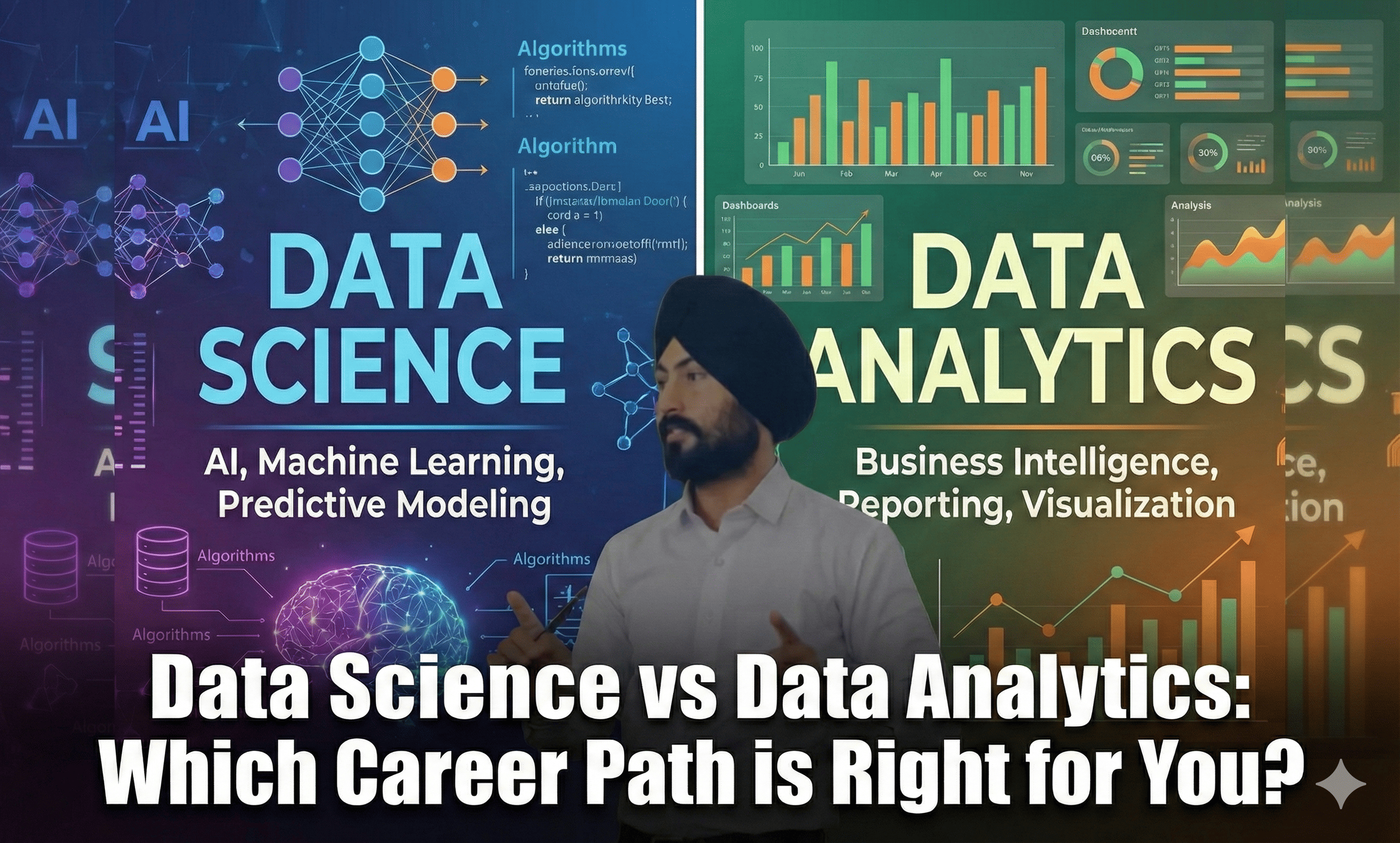
Data is the new oil, and careers in data are booming. But with terms like Data Science, Data Analytics, Data Engineering floating around, it's easy to get confused. In this article, we'll compare Data Science and Data Analytics to help you choose the right career path.
What is Data Analytics?
Data Analytics focuses on examining existing data to find insights, trends, and patterns that help businesses make better decisions. Data Analysts answer questions like "What happened?" and "Why did it happen?"
Key Responsibilities
- Collecting and cleaning data
- Creating reports and dashboards
- Performing statistical analysis
- Visualizing data for stakeholders
- Identifying business trends
Tools Used
- Excel (advanced)
- SQL
- Tableau / Power BI
- Python / R (basic)
- Google Analytics
What is Data Science?
Data Science is a broader field that combines statistics, programming, and domain expertise to extract insights AND build predictive models. Data Scientists answer "What will happen?" and "How can we make it happen?"
Key Responsibilities
- Building machine learning models
- Creating predictive algorithms
- Advanced statistical modeling
- Deep data exploration
- Developing AI solutions
Tools Used
- Python (advanced)
- R
- SQL
- TensorFlow / PyTorch
- Scikit-learn
- Jupyter Notebooks
Key Differences
| Aspect | Data Analytics | Data Science |
|---|---|---|
| Focus | Past & Present data | Past, Present & Future predictions |
| Complexity | Moderate | High |
| Programming | Basic to Intermediate | Advanced |
| Math Required | Statistics basics | Advanced statistics, linear algebra |
| Machine Learning | Not required | Core skill |
| Entry Barrier | Lower | Higher |
Salary Comparison (India 2025)
| Role | Fresher | 3-5 Years | Senior |
|---|---|---|---|
| Data Analyst | ₹4-7 LPA | ₹8-15 LPA | ₹15-25 LPA |
| Data Scientist | ₹6-10 LPA | ₹15-25 LPA | ₹25-50 LPA |
Which Should You Choose?
Choose Data Analytics If:
- You want a quicker path to employment
- You prefer business-focused work
- You're comfortable with moderate technical depth
- You enjoy creating visualizations and reports
- You want to start in data without heavy math
Choose Data Science If:
- You love mathematics and statistics
- You want to build predictive models
- You're interested in AI/ML
- You enjoy complex problem-solving
- You're willing to invest more time in learning
Career Transition Path
Many professionals start as Data Analysts and transition to Data Science after gaining experience. This path allows you to:
- Understand business context first
- Build foundational skills gradually
- Learn machine learning while working
- Make informed career decisions
Conclusion
Both Data Analytics and Data Science offer excellent career opportunities. If you're unsure, start with Data Analytics to build foundational skills, then progress to Data Science based on your interests. The key is to start learning and build practical experience through projects.
Interested in data careers? Explore our Data Science and Analytics courses designed for beginners with practical projects.